
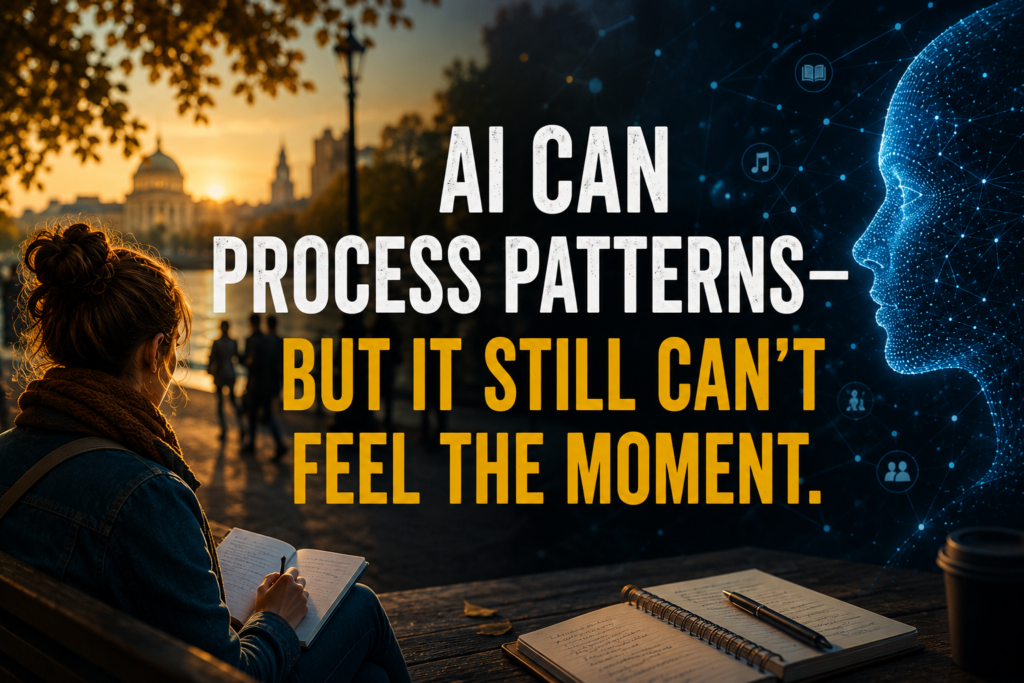
AI can process patterns — but it still can’t feel the moment.
What’s Happening:
A growing conversation inside creative writing circles is highlighting something many people are quietly beginning to realize about artificial intelligence: AI may be able to generate content at scale, but it still struggles to replicate deeply personal human perspective.
The discussion emerged from a creative writing instructor explaining how students observing the exact same real-world moment consistently produce entirely different stories, emotions, and interpretations. Even when inspired by similar events, each writer filters reality through their own memories, experiences, fears, and observations.
The larger takeaway is becoming increasingly important as AI-generated writing tools flood the internet.
Why It Matters:
The AI era is creating an explosion of content — but it may also increase the value of authentic human observation.
Large language models can remix patterns from existing information, imitate styles, and generate polished writing quickly. But they do not physically experience the world, form memories, carry emotional history, or develop intuition through lived moments.
That difference could become economically and culturally important.
As AI-generated content becomes more common, audiences may begin placing higher value on writing, storytelling, journalism, entertainment, and analysis that feels deeply human, observational, and emotionally grounded.
This may not eliminate AI from creative industries — far from it.
But it could redefine what audiences consider truly original.
Who Benefits:
- Writers with authentic voices
- Journalists and storytellers grounded in lived experience
- Creators who develop strong personal perspectives
- Independent thinkers and observational creatives
- Brands built around authenticity and trust
Who Loses:
- Generic AI-generated content farms
- Low-effort imitation writing
- Mass-produced “safe” creative content
- Platforms flooded with repetitive synthetic media
- Creators relying only on trend-chasing without original insight
What Happens Next:
The creative economy may slowly split into two categories:
- Infinite low-cost AI-generated content
- Premium human-driven perspective and storytelling
That could reshape publishing, media, entertainment, education, journalism, and even marketing.
Ironically, the AI boom may eventually make genuine human experience more valuable — not less.
Because in a world flooded with generated information, authentic perspective may become the rarest commodity of all.