

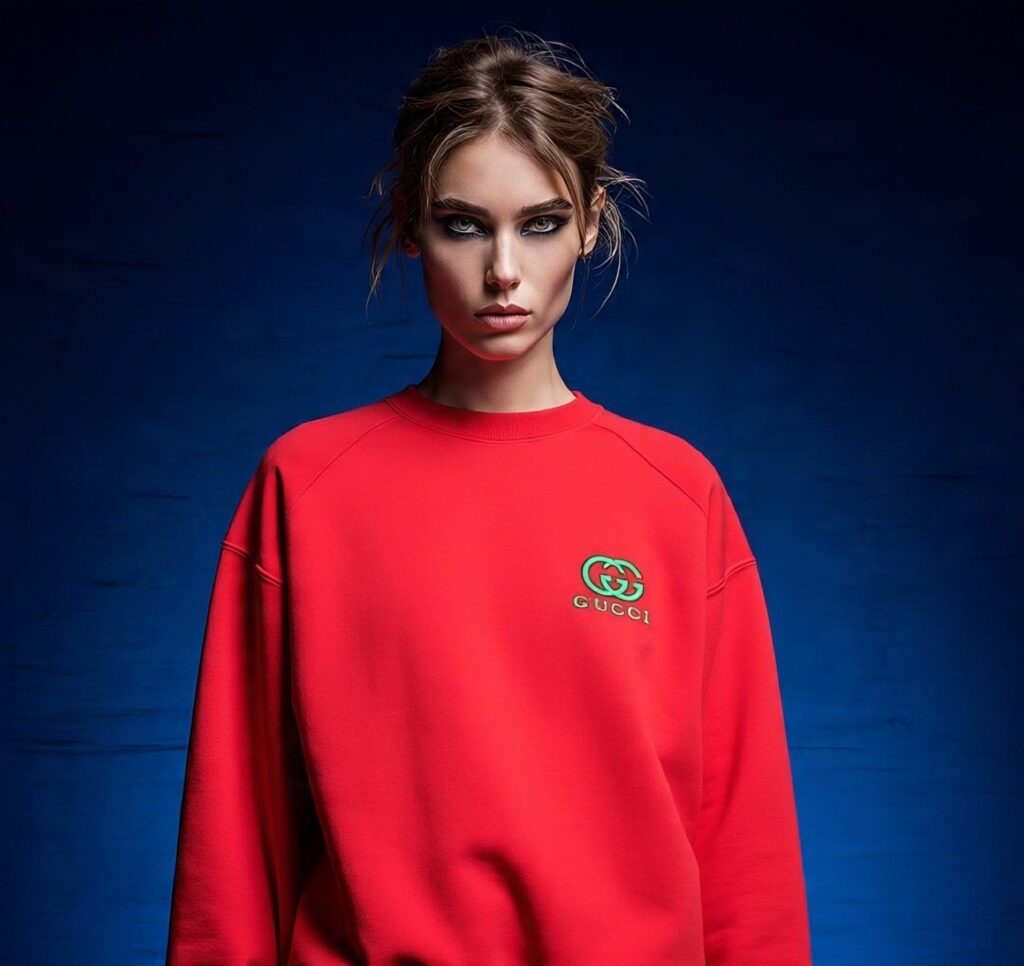
Gucci’s latest AI-created advertisements have sparked a strong reaction on the internet. These digital representations, such as an elegant woman in a fur coat walking through a restaurant, models compared to characters from “Grand Theft Auto,” and stylish car scenes, were shared on Gucci’s social media platforms before creative director Demna Gvasalia’s debut runway show at Milan Fashion Week.
The visuals quickly faced severe criticism online, with some individuals labeling them as “inferior” and “mediocre”— terms used to describe AI-generated material seen as subpar or mass-produced. One Instagram user remarked, “There was no need to employ AI for this, it looks so tasteless.” Another commenter stated, “The artistry has been reduced to a marketing gimmick.” A different user mentioned that using AI made the brand appear cheaper than TJ Maxx.
Not all of the images in the “Primavera” campaign were computer-generated—there was also a mix of other photographs included. Gucci did not provide a response when asked for comment.
Experts in branding suggest that while some consumers view the visuals as “low-cost,” Gucci likely opted for AI due to creative reasons rather than cost-saving measures. Blanca Zugaza Escribano, a fashion and luxury strategy consultant at Metyis, explained that this decision aims to position Gucci at the intersection of fashion, art, and technology. She pointed out that incorporating AI aligns with Gucci’s history of innovation and pushing boundaries.
Escribano added that using AI signifies creative futurism, reinforces the brand’s relevance in a technology-driven era, and enables the creation of surreal, impactful imagery that traditional methods may struggle to achieve easily.
This isn’t the first instance where Gucci has dabbled in AI technologies. Earlier this month, Gucci collaborated with Snapchat on an AI interactive lens that allowed users to embody characters from Gucci’s “La Famiglia” collection. These were fictional digital personas created for one of its collection launches.
During Kering—Gucci’s parent company—fourth-quarter earnings call, Armelle Poulou, CFO of Kering mentioned that the release of the “La Famiglia” Collection along with its associated activities are drawing attention back to Gucci.
Gucci is currently facing significant challenges as it experienced the sharpest decline in revenue among Kering’s brands. The brand saw a 22% drop on a reported basis and 19% on a comparable basis in its earnings for 2025.
According to Matthew Drinkwater, director of the Fashion Innovation Agency at the London College of Fashion, luxury has traditionally been rooted in craftsmanship, heritage, and storytelling. He cautioned against using AI in a manner that might overshadow craftsmanship since it could undermine the aspirational aspect of luxury.
Notably, Gucci has previously been criticized for diluting its brand identity. While its emphasis on maximalism and logos led to a significant revenue increase under creative director Alessandro Michele between 2015 and 2022 when consumer preferences shifted towards “quiet luxury,” Gucci struggled to adapt.
In addition to collaborations with mass-market retailers, Gucci’s customer base became younger and more aspirational over time. This shift led many customers to explore other options outside of Gucci.
Gucci is not alone in facing criticism for leveraging AI in marketing campaigns. For example, Valentino received backlash after launching an AI-generated campaign for its DeVain handbag late last year.
Elaine Parr, senior partner at IBM specializing in consumer products and retail industries in EMEA region, highlighted how luxury brands face challenges in delivering positive tech experiences amidst market uncertainties impacting spending habits and balancing modernization while preserving heritage.
Drinkwater observed that feedback on luxury brands via their Instagram comments section serves as an authentic focus group within the fashion industry. He noted that any use of AI tends to provoke strong reactions within fashion circles but emphasized that successful integration involves supporting creative ideas rather than replacing them entirely. Negative responses to campaigns underscore how swiftly opinions can shift when people feel human touch or craftsmanship is sidelined by technology advancements within fashion campaigns.