
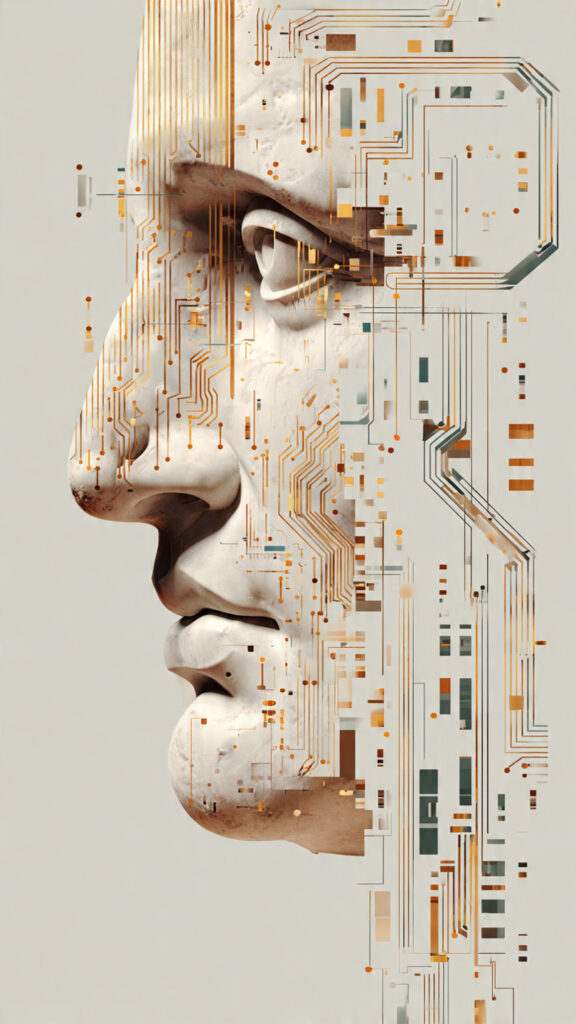
Here’s a more expanded discussion-style rewrite that ties the entire idea together into one flowing piece.
Is this the future of AI — and possibly the future of education and work itself?
For decades, philosophy majors were often portrayed as people pursuing degrees with little practical value in the real world. In a society increasingly driven by engineering, finance, coding, and technology, philosophy was frequently treated as an academic luxury rather than a serious career path.
Now, something unexpected is happening.
Some of the largest and most powerful AI companies in the world are actively hiring philosophers, ethicists, behavioral scientists, psychologists, sociologists, and humanities experts to help shape how artificial intelligence thinks, communicates, responds, and behaves.
That alone raises a major question:
Why would billion-dollar AI companies suddenly need philosophers?
The answer may reveal where the future of artificial intelligence is heading.
For years, the race in AI centered around one thing: capability. Companies wanted faster models, smarter systems, better predictions, and more powerful computing infrastructure. The focus was primarily technical — build bigger systems, train larger models, gather more data, and scale faster than competitors.
But as AI becomes more integrated into everyday life, a different problem is emerging.
The challenge is no longer simply:
“Can AI do this?”
The challenge is becoming:
“Should AI do this?”
“How should AI behave?”
“What values should it follow?”
“What happens when AI influences millions of people every day?”
These are not just engineering questions anymore.
AI systems are now influencing hiring decisions, education, healthcare, finance, advertising, customer service, news consumption, entertainment, political messaging, and even emotional relationships between humans and machines. The deeper AI moves into society, the more dangerous poorly aligned systems could become.
That is where philosophy enters the conversation.
Companies are beginning to realize that building intelligence is different from building wisdom.
An engineer may know how to make a machine respond faster.
A philosopher may ask whether the response itself is ethical, manipulative, truthful, biased, harmful, persuasive, or socially responsible.
That distinction matters more than many people realize.
Inside companies like Anthropic, philosophers are helping shape chatbot honesty, behavior, and ethical alignment. Google DeepMind has also integrated moral and political philosophy into AI governance and safety research. Across the industry, firms like OpenAI, Meta, and Microsoft are increasingly discussing AI alignment, ethics, human values, and long-term societal consequences.
This movement is growing in major technology centers like:
- San Francisco
- London
- New York City
- Toronto
At the same time, universities and AI labs are beginning to merge computer science with ethics, psychology, communications, and behavioral studies.
In some ways, this may represent the beginning of a complete shift in what society values.
For years, STEM fields dominated the future-of-work conversation. But AI may be forcing the world to rediscover something older: understanding human behavior itself.
Ironically, as machines become more intelligent, the uniquely human skills may become more valuable again.
Critical thinking.
Ethics.
Communication.
Emotional understanding.
Moral reasoning.
Behavioral analysis.
Decision-making.
Context.
The very subjects many people once dismissed could become central to controlling systems that shape billions of lives.
But there is another side to this story.
Critics argue that some of these ethics positions may exist more for public relations than real influence. Tech companies have historically moved at incredible speed, often prioritizing market dominance, competition, user growth, and profits above long-term societal concerns. Skeptics question whether philosophers inside these companies truly have decision-making power — or whether they mainly help companies appear responsible while the business machine continues moving forward unchanged.
That concern is not minor.
Because whoever defines AI behavior may ultimately shape culture itself.
If AI systems begin influencing what people see, believe, buy, trust, fear, support, or reject, then the people guiding those systems may hold enormous power over society’s future.
This is why the discussion around AI ethics is becoming so important.
The debate is no longer just about technology.
It is about influence.
Values.
Truth.
Power.
Human behavior.
And who gets to decide what “responsible AI” actually means.
Even the salaries reflect how seriously companies are taking this shift. High-level positions in AI ethics, governance, and safety are reportedly reaching salaries between $250,000 and $400,000 as competition for specialized talent grows.
So perhaps the bigger question is not whether this is happening.
It already is.
The real question may be:
As AI becomes more powerful, will humanity allow technology companies alone to shape its moral direction — or will society demand that philosophy, ethics, psychology, and human understanding become part of the foundation of artificial intelligence itself?
The Grey Ghost