
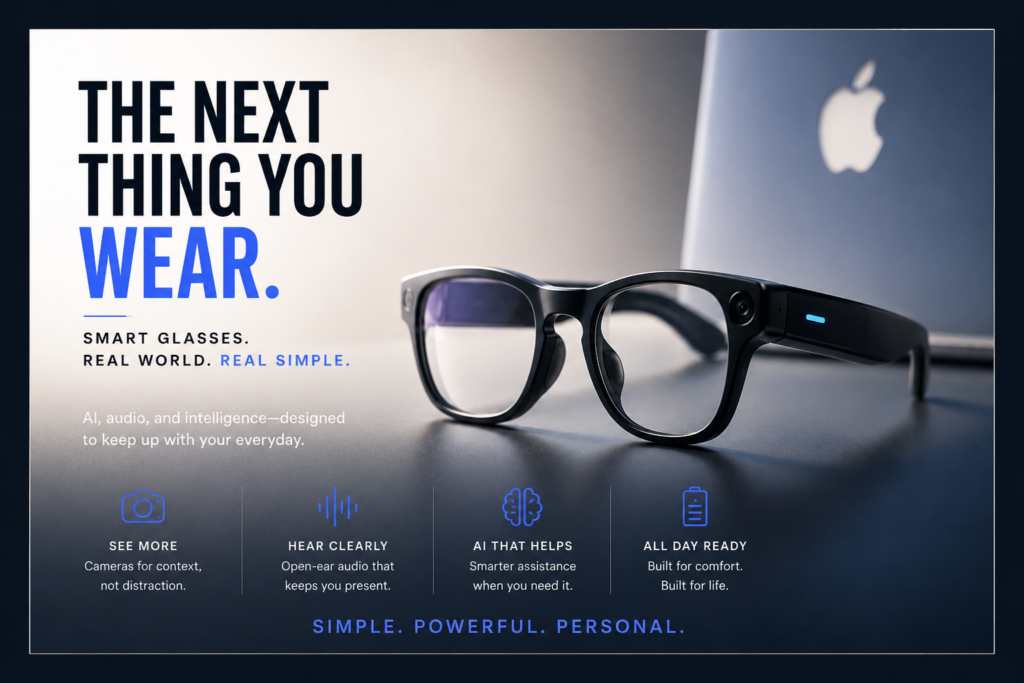
“Wearable AI Is Getting Smaller — and Smarter.”
Apple’s rumored smart glasses are generating major buzz ahead of their expected debut, but reports suggest the company may take a far more cautious approach than many consumers expect. While speculation continues around futuristic hand-gesture controls and advanced XR capabilities, insiders believe Apple’s first-generation glasses will likely focus on practicality, battery life, and seamless iPhone integration rather than trying to replicate the Vision Pro experience in a smaller form factor.
What’s Happening
Rumors surrounding Apple’s upcoming smart glasses claim the device could include:
- built-in cameras
- open-ear audio
- AI-powered assistance
- deep iPhone connectivity
However, reports suggesting Apple may add camera-based hand gesture controls are being met with skepticism from industry analysts, including Bloomberg’s Mark Gurman.
The concern centers around one major issue:
battery life.
Advanced hand tracking requires substantial processing power, something difficult to manage inside lightweight smart glasses without sacrificing usability.
Why It Matters
This highlights a growing reality inside the wearable AI race:
smaller devices create bigger engineering compromises.
Unlike larger XR headsets like the Vision Pro or Meta Quest 3, smart glasses have extremely limited space for:
- batteries
- processors
- cooling
- sensors
That means companies may need to prioritize:
- convenience
- comfort
- battery efficiency
- AI integration
…over flashy futuristic features.
Apple appears to understand that consumers may care more about:
- lightweight design
- all-day wearability
- useful AI assistance
- iPhone integration
…than experimental controls that drain battery life.
Who Benefits
Apple
A simpler first-generation product lowers technical risk while helping Apple enter the AI wearable market faster.
Consumers
Users may prefer practical glasses that work reliably over bulky experimental devices packed with features they rarely use.
AI Ecosystem Players
The larger trend remains clear:
AI assistants are increasingly moving from phones into wearable devices.
Who Could Lose
Competitors Betting on Full XR Experiences
Companies pushing heavy mixed-reality functionality may struggle if consumers prioritize simplicity and comfort instead.
Early Adopter Expectations
Consumers expecting a miniature Vision Pro may be disappointed if Apple’s first smart glasses are more limited than rumored.
What Happens Next
Apple’s first smart glasses may ultimately serve as:
a stepping stone toward future AI-native wearables.
The real long-term battle may not be about gesture controls or flashy XR effects.
It may center on:
- seamless AI integration
- lightweight hardware
- battery efficiency
- and making AI assistants available everywhere users go.
In many ways, Apple’s first smart glasses may matter less for what they can do today…
and more for what they signal about the future of ambient AI computing.