
What’s Happening
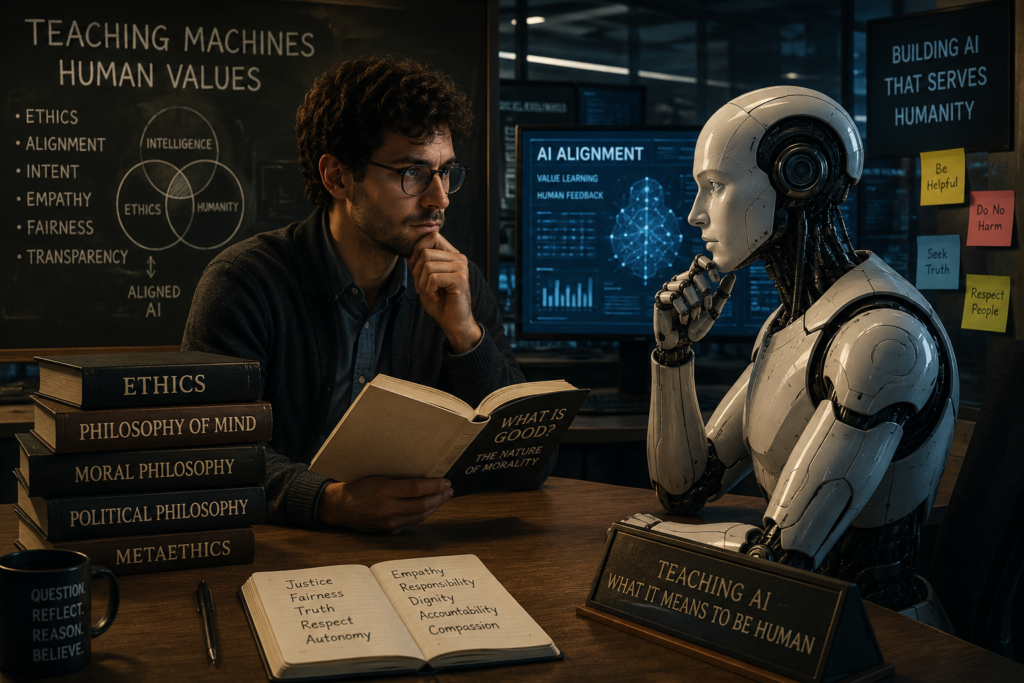
Philosophy majors — once viewed as having impractical degrees — are increasingly being recruited by AI companies to help shape how artificial intelligence systems think, respond, and behave.
As AI becomes more integrated into daily life, tech firms are investing heavily in people capable of addressing questions involving:
- ethics
- morality
- human values
- trust
- decision-making
- behavioral alignment
The goal is not simply building smarter AI — it’s building AI that behaves in ways humans consider acceptable, trustworthy, and safe.
Inside AI labs, philosophers are now helping create:
- behavioral rules
- ethical frameworks
- response guidelines
- safety systems
- value alignment strategies
Why It Matters
This signals a major shift in how AI development is evolving.
The industry is beginning to recognize that the biggest AI risks may not just involve technology — they involve judgment, ethics, trust, and human behavior.
As AI systems become more powerful, companies face growing pressure from:
- governments
- businesses
- regulators
- consumers
to prove these systems can make decisions responsibly.
That has created demand for people trained to think through complex moral and societal questions.
Who Benefits
- Philosophy graduates entering high-paying tech roles
- AI companies seeking more trustworthy systems
- Governments and regulators demanding safer AI
- Businesses relying on AI for sensitive decisions
- Consumers seeking more human-aligned technology
Who Could Lose
- Companies prioritizing speed over ethical safeguards
- AI firms viewed as reckless or untrustworthy
- Workers displaced by poorly aligned automation systems
- Users harmed by biased or manipulative AI behavior
What Happens Next
Expect more non-technical professionals to enter the AI industry.
The future AI workforce may increasingly include:
- philosophers
- psychologists
- sociologists
- behavioral scientists
- ethicists
- policy experts
The next AI battle may not simply be about who builds the smartest systems — but who builds systems people actually trust.
What’s Happening
Philosophy majors — once viewed as having impractical degrees — are increasingly being recruited by AI companies to help shape how artificial intelligence systems think, respond, and behave.
As AI becomes more integrated into daily life, tech firms are investing heavily in people capable of addressing questions involving:
ethics
morality
human values
trust
decision-making
behavioral alignment
The goal is not simply building smarter AI — it’s building AI that behaves in ways humans consider acceptable, trustworthy, and safe.
Inside AI labs, philosophers are now helping create:
behavioral rules
ethical frameworks
response guidelines
safety systems
value alignment strategies
Why It Matters
This signals a major shift in how AI development is evolving.
The industry is beginning to recognize that the biggest AI risks may not just involve technology — they involve judgment, ethics, trust, and human behavior.
As AI systems become more powerful, companies face growing pressure from:
governments
businesses
regulators
consumers
to prove these systems can make decisions responsibly.
That has created demand for people trained to think through complex moral and societal questions.
Who Benefits
Philosophy graduates entering high-paying tech roles
AI companies seeking more trustworthy systems
Governments and regulators demanding safer AI
Businesses relying on AI for sensitive decisions
Consumers seeking more human-aligned technology
Who Could Lose
Companies prioritizing speed over ethical safeguards
AI firms viewed as reckless or untrustworthy
Workers displaced by poorly aligned automation systems
Users harmed by biased or manipulative AI behavior
What Happens Next
Expect more non-technical professionals to enter the AI industry.
The future AI workforce may increasingly include:
philosophers
psychologists
sociologists
behavioral scientists
ethicists
policy experts
The next AI battle may not simply be about who builds the smartest systems — but who builds systems people actually trust.
What’s Happening
Philosophy majors — once viewed as having impractical degrees — are increasingly being recruited by AI companies to help shape how artificial intelligence systems think, respond, and behave.
As AI becomes more integrated into daily life, tech firms are investing heavily in people capable of addressing questions involving:
ethics
morality
human values
trust
decision-making
behavioral alignment
The goal is not simply building smarter AI — it’s building AI that behaves in ways humans consider acceptable, trustworthy, and safe.
Inside AI labs, philosophers are now helping create:
behavioral rules
ethical frameworks
response guidelines
safety systems
value alignment strategies
Why It Matters
This signals a major shift in how AI development is evolving.
The industry is beginning to recognize that the biggest AI risks may not just involve technology — they involve judgment, ethics, trust, and human behavior.
As AI systems become more powerful, companies face growing pressure from:
governments
businesses
regulators
consumers
to prove these systems can make decisions responsibly.
That has created demand for people trained to think through complex moral and societal questions.
Who Benefits
Philosophy graduates entering high-paying tech roles
AI companies seeking more trustworthy systems
Governments and regulators demanding safer AI
Businesses relying on AI for sensitive decisions
Consumers seeking more human-aligned technology
Who Could Lose
Companies prioritizing speed over ethical safeguards
AI firms viewed as reckless or untrustworthy
Workers displaced by poorly aligned automation systems
Users harmed by biased or manipulative AI behavior
What Happens Next
Expect more non-technical professionals to enter the AI industry.
The future AI workforce may increasingly include:
philosophers
psychologists
sociologists
behavioral scientists
ethicists
policy experts
The next AI battle may not simply be about who builds the smartest systems — but who builds systems people actually trust.