
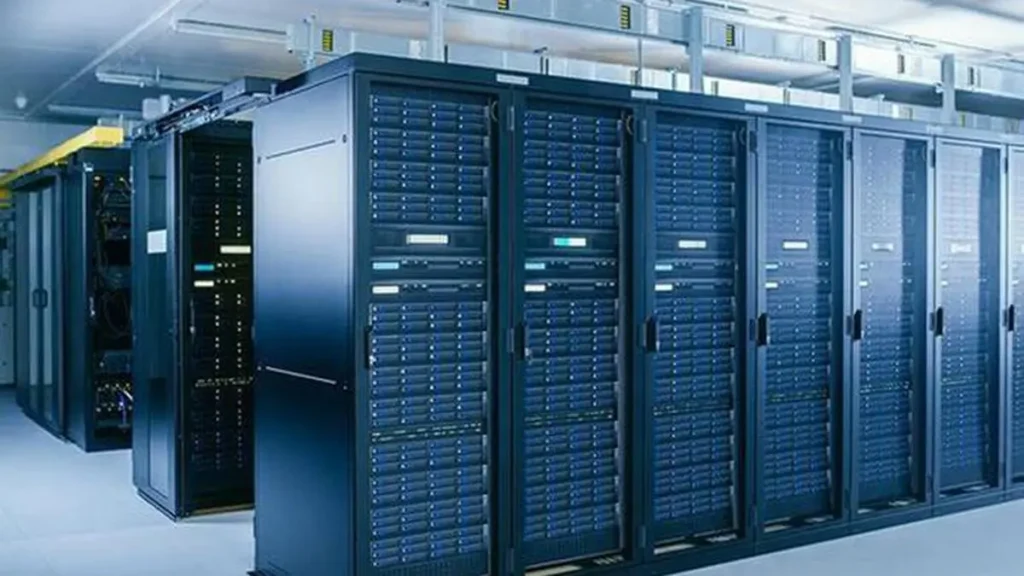

India is preparing to expand its AI data center ambitions, aiming to reach a capacity of 6-8 gigawatts (GW) by 2030. Government officials and industry leaders are emphasizing the importance of thorough resource planning, precise modeling exercises, long-term power availability, and regulatory stability at both the Central and State levels.
The growing demand for high-performance accelerated servers in AI computing is driving up electricity consumption. For example, according to MIT’s Lincoln Laboratory, generating an image with generative AI requires energy equivalent to charging a smartphone.
Furthermore, power consumption is increasing significantly. The International Energy Agency (IEA) reported that data center power consumption has been growing at a rate of 12% annually over the past five years.
During the India AI Impact Summit 2026, government officials, hyper scalers, and industry leaders expressed concerns about the uncertain future electricity demand from AI-enabled data centers and hyper scalers.
Forecasting future power requirements for data centers will involve developing scenario-based models to explore alternative approaches and provide insights on timing relevant for decision-making in the energy sector.
Speaking at the AI Impact Summit 2026 panel discussion, Grid India CMD Samir Chandra Saxena highlighted the dense and intense nature of data center loads compared to traditional bulk loads. By 2030, these data centers could potentially account for a demand equivalent to that of an entire state, possibly reaching 8-10 GW.
Saxena stressed the need for comprehensive infrastructure planning from a grid operator’s perspective. He also emphasized that data centers should meet resource adequacy requirements not only for primary energy but also for reserve and balancing needs.
Abhishek Ranjan, CEO of distribution utility BSES, underlined the importance of thorough resource planning on the supply side. There is a need for stable electricity generation sources over extended periods.
While scaling up nuclear power in India may take time, hyper scalers should consider utilizing various sources such as captive generation in addition to grid-connected power.
Karthik Krishnan, Senior Manager Energy Strategy (APAC) at Amazon Web Services, pointed out that AI is still in the early stages of growth in India. Many challenges lie ahead in the future, which might emerge within the next 18 to 36 months. This presents an opportunity to address potential issues.
Hyper scalers prioritize speed and reliability of power as their key requirements. They also seek visibility on sourcing 100% renewable energy, regulatory consistency, and assurance of stable power prices for the next couple of decades.