
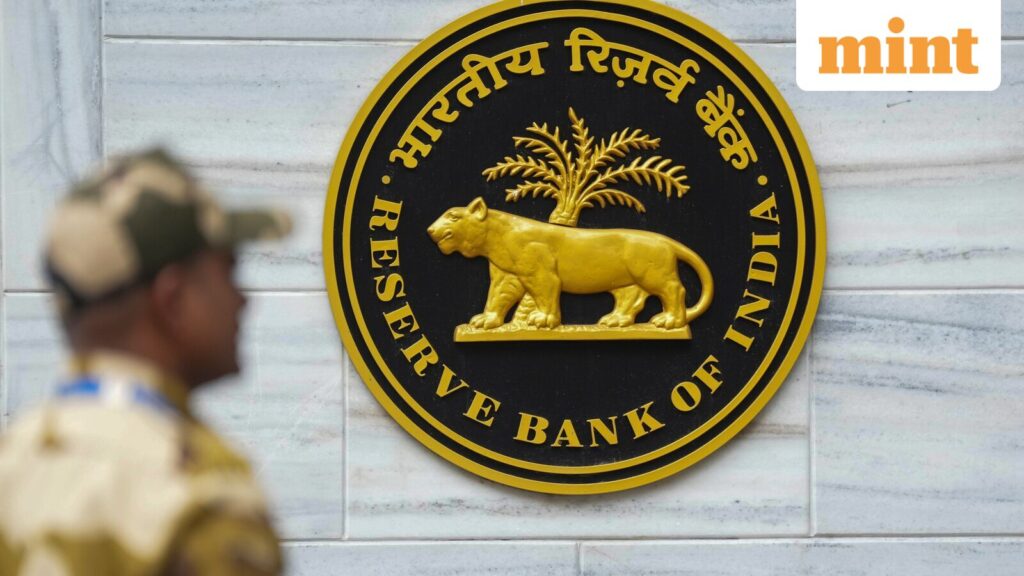

The emergence of AI is not only transforming various sectors but also impacting monetary policy. The Reserve Bank of India (RBI) will need to address both positive and negative disinflationary forces stemming from supply and demand disruptions. Can the RBI transition from simply adopting AI technology to becoming a regulator and creator of an AI-driven future?
The rapid integration of artificial intelligence (AI), particularly generative AI, is no longer just a minor technological change but a significant macroeconomic event. For the RBI, which is responsible for preserving price stability and fostering growth in a complex, developing economy, AI poses a dual challenge: it can serve as a source of disinflationary productivity and a tool for enhancing policy formulation.
Tao Zhang, the chief representative for Asia and the Pacific at the Bank for International Settlements (BIS), mentioned at the Global Fintech Fest that AI is reshaping not only the private financial sector but also the operations of central banks. Central banks now have to weigh the advantages and drawbacks of AI while upholding monetary and financial stability.
The proliferation of AI is reshaping economies through both overall supply and demand dynamics. Artificial intelligence has the potential to enhance productivity across various industries. In India, where the services sector holds abundant data and manufacturing is becoming more digitalized, AI could introduce a favorable supply shock, driving up output and mitigating inflationary pressures. According to the BIS Annual Economic Report 2024, if these benefits are widespread, they could bolster long-term growth and simplify inflation control.
In theory, increased productivity can expand capabilities, mitigate cost-related pressures, and assist the RBI in achieving its inflation goals without overly restrictive monetary measures.
However, this benefit comes with a downside. AI might displace jobs quicker than it generates new ones, particularly for workers with intermediate skills. Given India’s substantial digital and income disparities, the advantages of GenAI may be concentrated among skilled urban professionals while low-skilled laborers could face displacement. This could dampen household spending and exacerbate inequality, diminishing overall demand even as productivity boosts supply.
As a result, the RBI must monitor this labor market shift in real-time. It must differentiate between ‘positive disinflation’ resulting from enhanced efficiency and ‘negative disinflation’ due to weak demand and job losses. This will necessitate quicker access to more comprehensive data than what conventional quarterly or annual surveys provide.
AI’s analytical capabilities are already revolutionizing central banking by facilitating nowcasting – generating immediate estimates of growth and inflation using real-time signals. Entities like the European Central Bank are already leveraging natural language processing (NLP) and large language models (LLMs) to interpret news articles, social sentiments, and business narratives.
For the RBI, there lies an extensive opportunity. India generates vast real-time digital information through UPI transactions, e-way bills, satellite data, and social media conversations. Nonetheless, policy decisions continue to heavily rely on dated indicators.
By utilizing AI-based nowcasting, the RBI can identify supply constraints swiftly, gauge consumer sentiment accurately, and estimate regional economic activity almost instantly. For instance, AI could assess regional fuel sales or transportation data to infer local inflation patterns or analyze sentiments from vernacular media to gauge household inflation expectations – thereby reducing policy response delays.
Nevertheless, central banks should view AI as a support tool rather than a replacement for human judgment. Models may misinterpret context or fail to adapt when conditions change. Thus, human oversight and explainable-AI (XAI) safeguards are crucial.
The implications of AI are especially profound in financial oversight. India’s fintech ecosystem – founded on UPI infrastructure and home to numerous digital lenders – offers both inclusivity and instability. In this context, AI-powered Supervisory Technology becomes indispensable: it can identify anomalies, monitor inter-bank exposures, and assess alternate credit indicators such as utility payments or mobile usage patterns – thereby enabling credit extension to individuals lacking formal credit history.
Nonetheless, such tools carry risks of algorithmic biases – unintentionally perpetuating discrimination ingrained in training data.
Another risk involves third-party reliance: much of the global AI architecture is concentrated within a handful of providers – creating single points of failure. The RBI must ensure vendor diversity, stress-test digital infrastructure rigorously and enforce continuity plans for financial institutions.
AI also transforms how monetary policy transmits into actions: algorithmic pricing empowers major retailers to swiftly adjust prices in reaction to shocks – accelerating inflation transmission.
Moreover, AI-driven portfolio management and non-bank lending can hasten market responses to interest rate adjustments – shortening the lag between policy changes and their impact. This could complicate the RBI’s management of liquidity and interest rates; furthermore, if similar AI models dominate trading or credit scoring markets simultaneously during periods of stress they could amplify volatility tendencies.
Henceforth,the RBI must incorporate feedback loops driven by AI into its policy frameworks while reinforcing systemic-risk surveillance mechanisms.
Developing sophisticated AI models along with robust data governance structures entails high costs that may be burdensome for any single institution. Therefore,the RBI should establish an indigenous ‘community of practice’ among Indian regulators aimed at sharing best practices,data standards,and AI tools; concurrently engaging internationally with organizations like BIS,G20,and others to influence global guidelines regarding AI governance,cyber resilience,and data sharing pertinent for emerging economies.
AI stands poised to redefine economic landscapes.The success of RBI amidst these transformations hinges on how rapidly it evolves from being an adopter of technology into an adept regulator steering towards an AI-driven future.These thoughts reflect the author’s personal opinions.The author serves as a professor in economics as well as Executive Director at Bhavan’s SPJIMR Centre for Family Business & Entrepreneurship.