
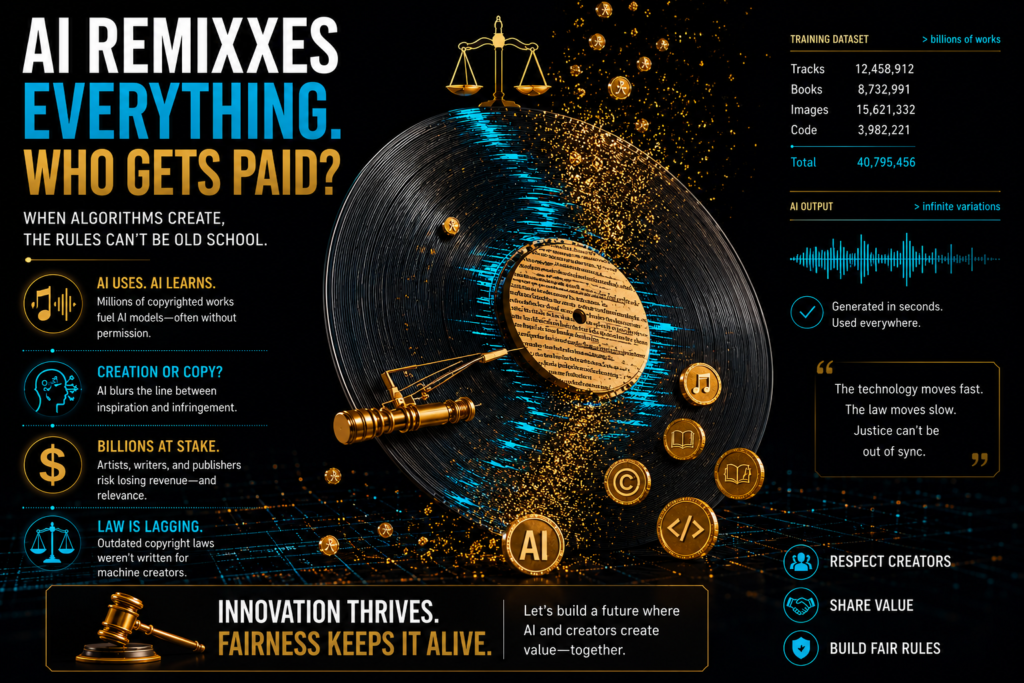
“AI Is Turning Old Songs Into New Legal Battles.”
What’s Happening
Stick Figure unexpectedly saw its seven-year-old song “Angels Above Me” explode across international music charts after AI-generated remixes of the track began circulating online.
The remixes helped push the song to the top of iTunes charts in countries including the United Kingdom, Austria, and Canada. But according to the band’s management, many of these viral versions were unauthorized AI-generated edits posted without permission, credit, or compensation.
The band is now locked in an ongoing battle to remove counterfeit AI remixes appearing across platforms like Spotify and YouTube.
Why It Matters
This is becoming one of the biggest hidden problems in the AI music economy.
AI tools can now:
- remix songs instantly
- clone styles
- alter vocals
- generate fake versions
- mass-upload content at scale
That means artists can suddenly go viral from music they did not approve, distribute, or profit from.
The larger issue is that AI-generated content is starting to outpace the music industry’s ability to verify ownership and authenticity.
Who Benefits
- AI music tool companies
- Viral content creators
- Fake music uploaders collecting royalties
- Platforms gaining engagement from remix culture
Who Could Lose
- Original artists and rights holders
- Independent musicians lacking legal resources
- Music distributors overwhelmed by AI uploads
- Fans unable to tell real tracks from fake versions
What Happens Next
The music industry may be heading toward a new era where:
- verification becomes critical
- artist authentication tools become standard
- AI detection systems expand rapidly
- streaming platforms face greater legal pressure
The real battle may no longer be just piracy.
It may become proving what music is officially real in an internet flooded with AI-generated copies, remixes, and synthetic content.