
The Influence of Artificial Intelligence on Engineering Careers May Differ from What Is Anticipated
The advancement of workflows and integration of novel capabilities is occurring at a quicker pace compared to prior technologies, indicating that recent graduates could play a crucial role in this transition.
Artificial intelligence is projected to remove numerous routine, entry-level responsibilities, potentially enabling engineering students who are proficient in cutting-edge tools to commence their careers in more senior roles.
AI acts as a catalyst for enhancing the learning process for junior engineers.
Although AI excels at resolving complex problems, specialized knowledge, analytical thinking, and verification processes will continue to be indispensable.
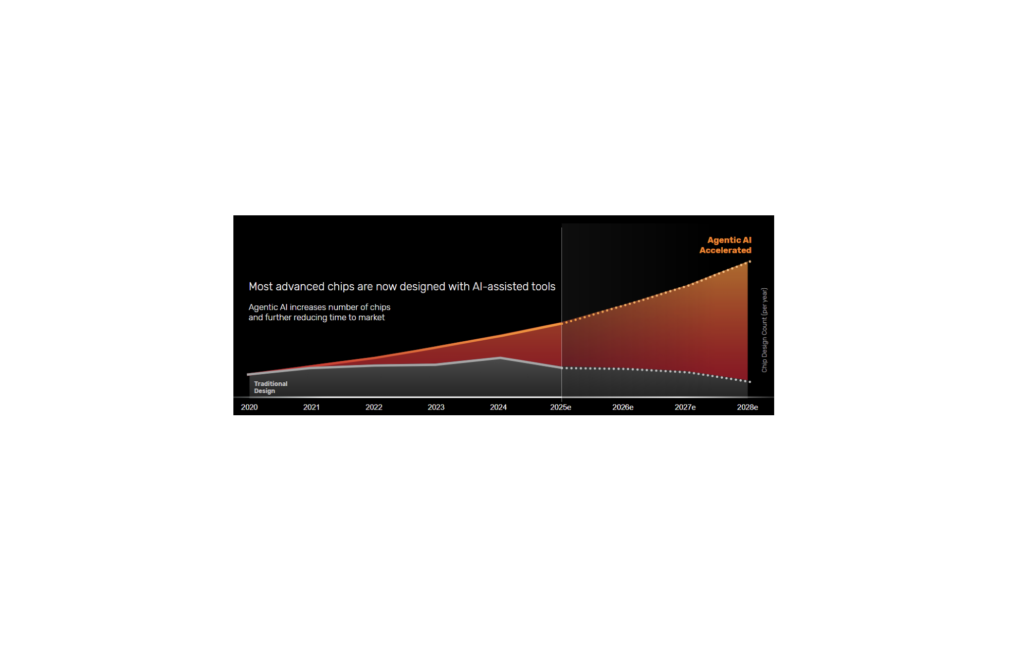
AI is likely to phase out many entry-level positions in chip design by automating repetitive and data-heavy tasks. Yet, there is an expectation that current engineering students will receive training using these tools so they can enter the workforce at higher positions.
A significant talent shortage necessitates a more effective utilization of engineers, with AI offering assistance. However, the extent and depth of disruptions caused by AI remain uncertain.
There are two divergent perspectives regarding its impact. “One approach involves analyzing existing workflows and identifying areas that could benefit from AI enhancement or replacement,” explained Alexander Petr, a senior director at Keysight EDA. “On the other hand, some advocate for completely reimagining workflows and implementing AI-driven transformations. Both approaches have their merits.”
Every aspect of our surroundings carries its own unique culture and significance. People are often resistant to change due to ingrained habits. This explains why some advocate for enhancing existing processes with AI while others question if AI can substitute for multiple human roles. Essentially, AI is expected to mirror the work of engineers.
AI is tasked with replicating the problem-solving methods and outcomes generated by human engineers. This presents a far greater challenge than exploring alternative approaches where AI can tackle high-dimensional problems beyond human capabilities and automate tasks further.
Some distinguish between two types of seniority levels, one being more easily replaceable than the other. “One type entails a senior engineer well-versed in various aspects from basic tools to advanced levels,” noted Kexun Zhang, head of research at ChipAgents.
The other type possesses broader expertise in project organization and accumulates experience over years of real-world practice, both successes and failures.
Proficiency in lower-level tools may not be imperative for an engineer’s education due to advancements in computer science (CS) and electronic engineering (EE), where each generation introduces tools at a higher level of abstraction than the previous ones.
As mature higher-level abstraction tools become widely adopted, detailed knowledge about lower abstraction levels may not be necessary. This principle applies to both EE and CS fields.
While familiarity with different abstraction levels remains valuable, junior engineers may not need to delve deeply into lower abstractions. Instead, they should aim to strike a balance and gain experience working on diverse projects to eventually advance into senior roles.
This addresses concerns about how engineers can develop expertise when many junior positions may be replaced by AI. “This topic has been widely discussed among my peers and within our company concerning recent graduates,” said Daniel Rose, founding AI engineer at ChipAgents.
Numerous individuals from various educational backgrounds are leveraging AI advancements to expedite coding processes and make an impact in their respective industries. Without AI support, reaching a senior position might take significantly longer.
Mid-level engineers could face challenges during the transition driven by AI technology. “Entry-level engineers are becoming adept at utilizing AI tools as they navigate the learning curve,” highlighted Nandan Nayampally, chief commercial officer at Baya Systems.
Senior professionals possess deeper insights into systems architecture, design flows, domain-specific expertise, and contextual understanding compared to mid-level engineers who might find it challenging to adapt to utilizing AI tools effectively.
AI plays a crucial role in advancing human productivity and managing design intricacies. According to Anand Thiruvengadam, product management senior director at Synopsys…
The semiconductor industry’s severe talent shortage suggests that AI may enhance productivity rather than replace human engineers…
Current job market trends involve:
– Automation of routine tasks: Increasingly capable AI tools can handle repetitive coding tasks efficiently…
– Shifts in job market dynamics: Entry-level positions may undergo restructuring or consolidation as organizations adopt more efficient AI-powered tools…
– Evolution of skill requirements: Academic programs are incorporating AI literacy into their curricula as graduates are expected to leverage these tools for enhanced productivity…
– Higher entry points: With basic tasks handled by AI tools, new graduates might enter the workforce at more advanced levels sooner than before…
– Importance of human skills: Skills like critical thinking and domain-specific expertise remain essential as they cannot be easily automated…
As Electronic Design Automation (EDA) evolves…