
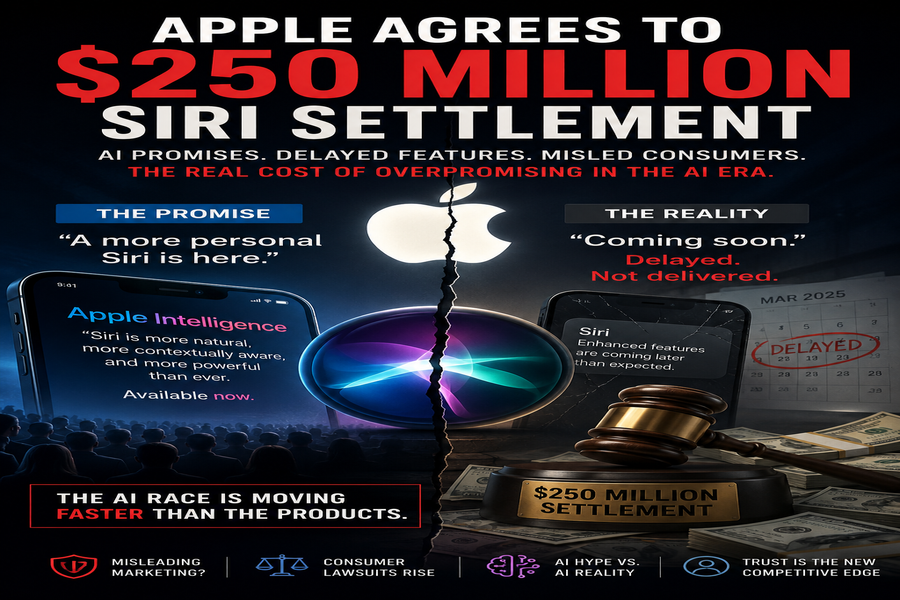
“The AI Race Is Moving Faster Than The Products.”
What’s Happening
Apple has agreed to a $250 million class-action settlement over allegations that it overstated the capabilities of its “Apple Intelligence” rollout — particularly upgraded AI features tied to Siri that plaintiffs claim were advertised before they were ready.
The lawsuit argues Apple promoted advanced Siri functionality during its 2024 developer conference and throughout the iPhone 16 launch cycle, helping drive device sales despite some flagship AI features being delayed or unavailable.
Eligible U.S. customers who purchased certain iPhone 15 and iPhone 16 models during the covered timeframe may receive compensation depending on how many claims are filed.
Why It Matters
This is becoming a major issue across the AI industry:
Companies are racing to market AI features before they are fully functional.
The pressure to appear competitive in the AI arms race is now so intense that marketing departments are often announcing capabilities before engineering teams can reliably deliver them.
For Apple, the risk is larger than a settlement amount.
Its brand has historically been built around:
reliability
polish
trust
“it just works”
AI changes that equation because generative AI systems are:
unpredictable
constantly evolving
difficult to perfect on fixed timelines
The Siri situation exposes the growing gap between:
AI demonstrations
andAI products ready for mass consumer deployment
Who Benefits
Consumers receiving compensation
Competitors whose AI products already shipped
AI transparency advocates
Regulators watching AI advertising claims more closely
Who Could Lose
Apple’s reputation for product reliability
Consumers who bought devices expecting immediate AI functionality
Companies making aggressive AI promises before launch readiness
The broader AI industry if public trust weakens
What Happens Next
This likely will not be the last AI-related lawsuit involving product marketing.
As AI becomes the centerpiece of:
smartphones
operating systems
search engines
productivity tools
wearable devices
companies may face growing legal scrutiny over:
exaggerated AI claims
unfinished rollouts
misleading demos
“coming soon” functionality used to drive sales
The larger signal here is that the AI race is no longer only about innovation.
It is now about whether companies can realistically deliver what their AI marketing promises — before regulators, lawsuits, and consumers begin pushing back harder.