

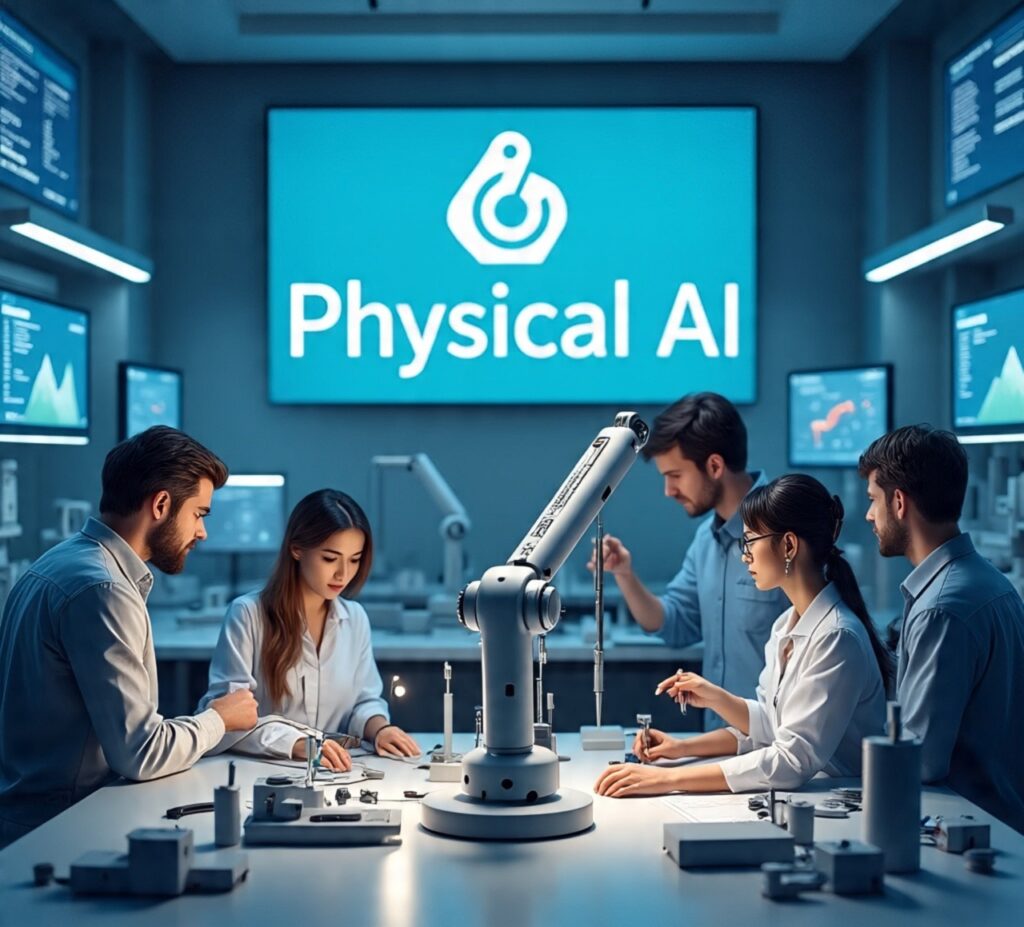
Arm Holdings, a chip technology company, has restructured its organization by establishing a Physical AI division to broaden its footprint in the robotics sector, as per company executives speaking to Reuters at CES, where robots are a prominent theme this year. This move to focus on robotics comes amidst numerous announcements and activities at CES revolving around humanoid robots. Various companies showcased robots at the expansive Las Vegas event that could assist in tasks such as constructing cars, cleaning restrooms, and dealing poker games – albeit at a slow pace.
Reuters has disclosed Arm’s formation of the Physical AI unit and restructuring for the first time. Arm will now manage three primary business segments: Cloud and AI, Edge (comprising mobile devices and PC products), and Physical AI, which will oversee its automotive operations. Robotics and automobiles are key components of physical AI and share a variety of sensor technologies and hardware. Car manufacturers like Tesla are developing robots for automating tasks in warehouses and factories.
Although based in the UK, Arm does not manufacture chips itself; instead, it provides the foundational technology that powers most smartphones worldwide and an increasing number of devices such as laptops and data center chips. The company generates revenue through licensing fees and royalties when its designs are utilized.
The heightened emphasis on Physical AI is part of a broader strategy to boost business growth. Under CEO Rene Haas’ leadership for approximately four years now, Arm has implemented strategies to increase prices for its latest technology and is contemplating designing its own complete chips. Arm executives view robotics as a market with significant long-term growth potential. Drew Henry, head of the newly established unit, stated that physical AI solutions could greatly improve labor efficiency, free up additional time, and potentially have a substantial impact on gross domestic product.
The decision to merge automotive and robotics into a single unit was driven by similar customer requirements related to power constraints, safety, and reliability, according to Badani. Numerous automakers are venturing into humanoid robotics as well. When questioned about clients, Henry stated that they collaborate with various entities. Arm-based chips are utilized by numerous car manufacturers globally and by robotics firms like Boston Dynamics, which is under Hyundai’s ownership.
Both companies unveiled an operational Atlas humanoid robot that Hyundai plans to deploy in U.S. factories by 2028. Interest in humanoid robots has surged as companies within the technology and automotive sectors perceive human-like machines as the next frontier in AI and automation.
Elon Musk, CEO of Tesla, has emphasized the significance of the company’s humanoid robot project named Optimus for its future prospects. Musk believes that these robots could eventually surpass their vehicle business in scale and unlock substantial economic value by performing tasks unappealing to humans.
This year’s CES has been dominated by robotics; Reuters noted numerous companies exhibiting humanoid robots at the vast convention center halls where they showcased their capabilities through dancing performances, playing ping-pong, and executing repetitive sorting duties. Many of these machines at CES incorporate artificial intelligence to further enhance their functionalities.
C.J. Finn from PwC mentioned that combining machining with advanced AI is where significant progress is being made to enhance precision, productivity, or revolutionize production processes within various industries.
Robert Playter from Boston Dynamics acknowledged a current hype cycle surrounding humanoid robots but highlighted his company’s success in deploying thousands of quadruped robots into the market profitably.
Mobileye, a technology firm owned partly by Intel, announced intentions to acquire robotics company Mentee for $900 million to integrate its products under its umbrella. Nvidia also revealed physical AI products such as Alpamayo aimed at powering the upcoming wave of autonomous vehicles.