
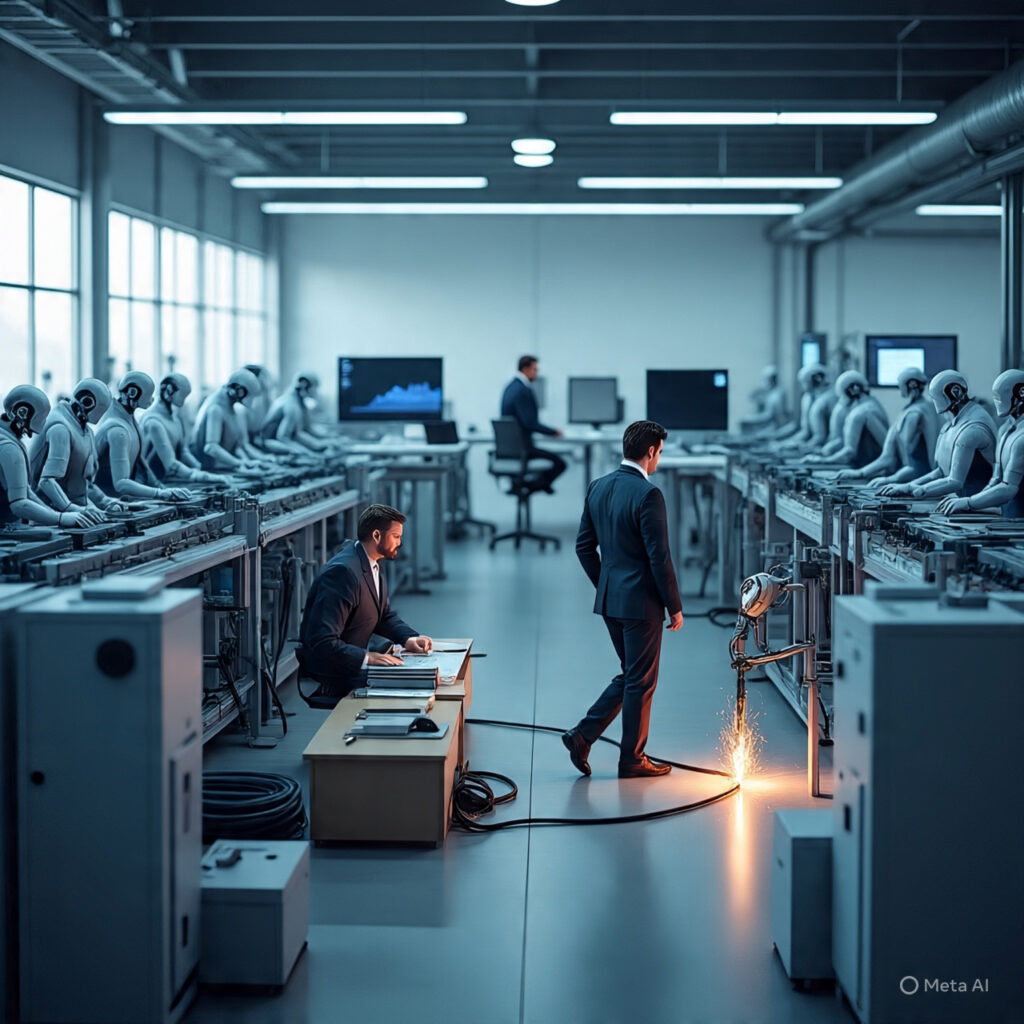

Hello and good morning. Physical AI is breaking out of the virtual realm and entering reality, a transition known as physical AI. This shift means that machines are no longer just confined to working with computers or digital information; they can now perceive, reason, and take action in the physical world. The concept of physical AI was a focal point at a recent Fortune Brainstorm Tech dinner held on Monday at CES 2026 in Las Vegas.
During the event, Andrew Nusca, who oversees Fortune’s Brainstorm series and authors the Fortune Tech newsletter, engaged in a fireside discussion with Cristiano Amon, the President and CEO of Qualcomm, on this very topic. Amon concurred with Jensen Huang, the CEO of Nvidia, who foresaw that physical AI would be the next significant advancement in artificial intelligence.
Amon emphasized the immense potential of physical AI. This approach relies on real-time sensor data for training purposes — learning from what is seen, sensed, and done. This methodology empowers robots and autonomous vehicles to tackle intricate tasks, adapt to changing environments, and swiftly make decisions while navigating and engaging with their surroundings.
The realm of automotive technology is witnessing the rise of physical AI, according to Amon. He illustrated how assisted driving and autonomous driving epitomize challenges that fall under physical AI. With an array of sensors and cameras monitoring the surroundings and guiding vehicle movements, Qualcomm has successfully transitioned into a prominent player within the automotive industry’s evolution towards “software-defined vehicles.”
Qualcomm’s venture into automotive technology stemmed from recognizing the escalating computational requirements within vehicles — particularly in processors for assisted driving applications. Amon stressed that bulky servers are impractical inside cars due to excessive power consumption and energy diversion.
To address these evolving needs, Qualcomm concentrated on developing energy-efficient semiconductor designs capable of managing substantial computing workloads. Drawing upon its expertise in consumer electronics, the company integrated cameras, sensors, and connectivity functions into a unified silicon component tailored for modern vehicles.
Amon expressed confidence that Qualcomm’s success in automotive technology would extend to robotics as well. He foresees physical AI playing a pivotal role in robotics beyond humanoid forms. At CES, Qualcomm unveiled an assortment of cutting-edge robotics technologies.
Deloitte’s 2026 tech trends report delves into the merging realms of AI and robotics. The report underscores how robots empowered by physical AI have transcended research facilities and factory floors to undertake diverse tasks like inspecting infrastructure grids, aiding in medical procedures, navigating urban landscapes, and collaborating with humans in warehouse settings. As organizations surmount obstacles hindering widespread adoption, AI-enhanced robots are poised to transition from specialized applications to mainstream integration.