
“The Real AI Battle Is Shifting From Search… to Control of Your Digital Life.”
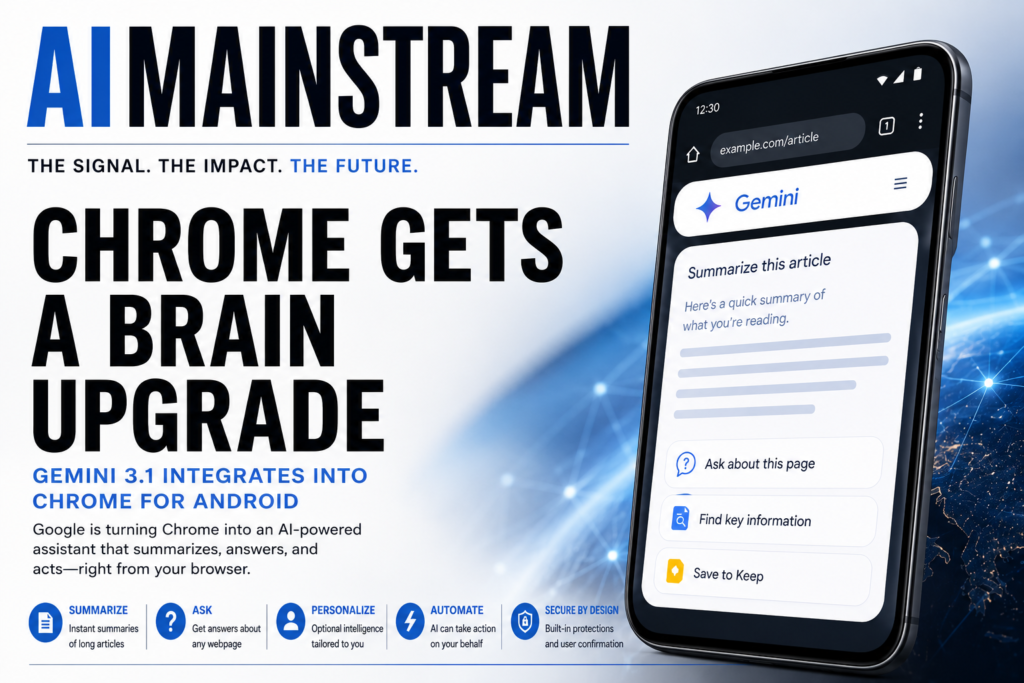
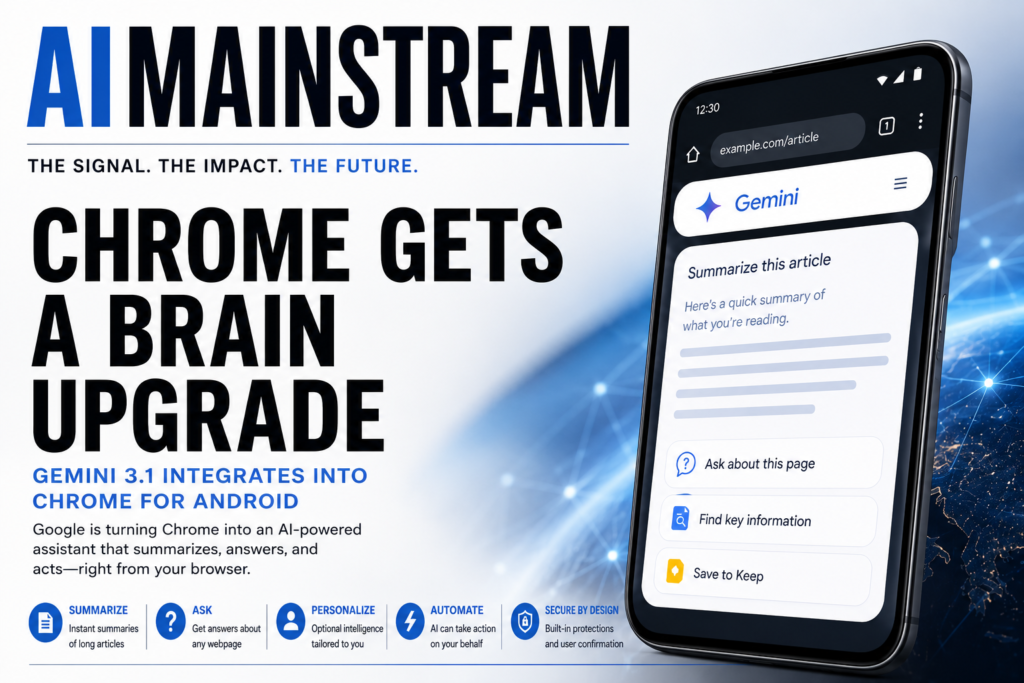
Google is preparing to integrate Gemini 3.1 directly into Chrome for Android beginning in June, transforming the browser from a simple web tool into a fully AI-powered assistant capable of summarizing articles, answering questions about webpages, performing online tasks, and interacting across Google’s ecosystem without users ever leaving Chrome.
The move signals something much bigger than a browser update. Google is attempting to turn Chrome into a persistent AI operating layer that sits between users and the internet itself.
What’s Happening
Users will soon be able to tap a Gemini icon directly inside Chrome for Android and ask questions about whatever webpage they are viewing. Instead of copying text into an AI chatbot or switching apps, Gemini will analyze the page context in real time.
Google says Gemini in Chrome will be able to:
- summarize lengthy articles
- answer questions about webpages
- extract information instantly
- create calendar events from webpages
- pull details from Gmail conversations
- save recipe ingredients into Google apps
- complete online tasks automatically
Google is also introducing “Personal Intelligence,” an optional feature allowing Gemini to personalize responses based on a user’s interests, preferences, and even family-related information.
Meanwhile, a feature called “auto browse” could allow Chrome to perform actions on behalf of users, including handling repetitive online tasks like updating recurring orders or securing parking tied to event tickets.
Why It Matters
This is one of Google’s clearest moves yet toward making AI the primary interface between humans and the internet.
Instead of users manually navigating websites, searching, clicking, comparing, reading, and organizing information themselves, AI increasingly becomes the middle layer handling those interactions automatically.
Chrome is no longer just becoming “AI-enhanced.”
Google appears to be turning it into:
an autonomous digital assistant living inside the browser itself.
That changes:
- how users consume information
- how websites receive traffic
- how advertisers compete for attention
- how businesses optimize online experiences
- how much control users hand over to AI systems
The long-term implication is massive:
AI may eventually become the gatekeeper between users and the open web.
Who Benefits
This strengthens Google’s ecosystem dramatically by keeping users inside Chrome and connected Google services longer.
Power Users
People overwhelmed by information may benefit from AI organizing, summarizing, and automating repetitive tasks.
Advertisers & Businesses Optimized for AI
Companies that structure content clearly for AI interpretation may gain visibility as AI assistants increasingly decide what information users see first.
AI Infrastructure Providers
The more AI becomes embedded into browsers and operating systems, the greater the demand for AI computing power, cloud infrastructure, and personalization systems.
Who Could Lose
Traditional Websites
If AI summarizes webpages directly inside Chrome, fewer users may click through to original sources.
Publishers & Media Companies
Traffic patterns could shift significantly if users increasingly consume AI-generated summaries instead of reading full articles.
Privacy Advocates
The deeper AI integrates into personal browsing behavior, calendars, emails, and preferences, the larger the concerns surrounding surveillance, profiling, and behavioral targeting.
Smaller Competitors
Google’s ability to deeply integrate Gemini across Chrome, Android, Gmail, and Search creates ecosystem advantages smaller AI companies may struggle to compete against.
What Happens Next
This likely represents the beginning of “AI-native browsing.”
Over time, browsers may evolve into systems that:
- negotiate purchases
- schedule appointments
- filter information
- summarize the internet
- automate repetitive digital tasks
- make recommendations before users even ask
The major question becomes:
how much autonomy users are willing to surrender for convenience.
Google says sensitive actions like purchases or social media posts will still require user confirmation, but the broader direction is clear:
AI is moving from assistant… to active participant.
And once AI systems become trusted enough to handle routine online behavior automatically, the relationship between humans, browsers, search engines, and websites may fundamentally change.
This is no longer just about search.
It is about who controls the layer between people and information.