
For years, technology promised to automate thinking.
Search engines made information instant.
Algorithms reduced investigation to keywords.
Artificial intelligence now answers questions in seconds.
But something unexpected may be happening alongside the rise of AI:
People are rediscovering the value of old-fashioned investigative thinking.
Games like The Ratline unintentionally highlight a growing reality about the modern AI era. While the game focuses on tracking hidden identities through documents, phone calls, photographs, timelines, and fragmented clues, the deeper appeal may actually come from something much larger:
The satisfaction of connecting dots manually.
That matters more than many people realize.
Because in today’s world, information is no longer scarce.
Meaning is.
Artificial intelligence can summarize massive amounts of data almost instantly. But AI still depends heavily on how humans frame questions, interpret relationships, identify inconsistencies, and recognize patterns hidden beneath surface-level information.
That process often looks a lot like detective work.
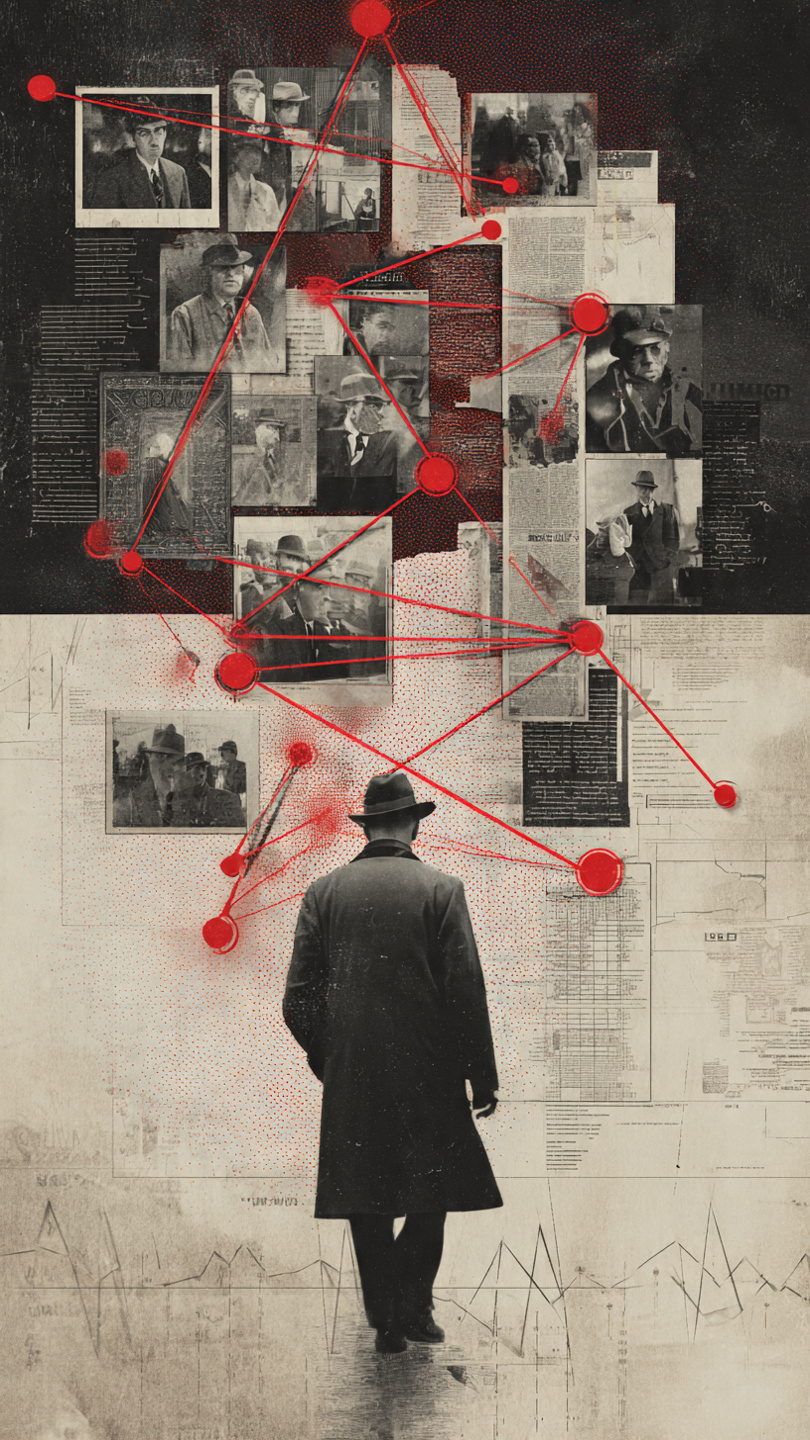
In The Ratline, players sift through scraps of evidence pinned across a board:
- business cards,
- letters,
- photographs,
- names,
- timelines,
- phone records,
- and hidden connections.
Progress depends less on speed and more on observation, curiosity, and patience.
Ironically, those same skills are becoming increasingly valuable in the AI age.
As artificial intelligence floods the internet with content, automated summaries, synthetic media, and algorithmically generated information, the ability to investigate critically may become one of the most important human advantages left.
Because AI can generate answers.
But humans still need to determine:
- which answers matter,
- which patterns are real,
- what information is misleading,
- and what conclusions should actually be trusted.
That distinction is becoming extremely important.
The next generation of workers, analysts, journalists, investors, cybersecurity experts, researchers, and investigators may spend less time gathering information and far more time validating it.
In other words:
The AI era may not eliminate detective work.
It may massively increase the value of it.
From a hedge fund manager’s perspective, this shift becomes even more important. Modern investing increasingly resembles investigative analysis:
- tracing incentives,
- identifying hidden relationships,
- following money flows,
- validating narratives,
- recognizing manipulation,
- and piecing together fragmented information before competitors do.
That process mirrors detective work far more than most people realize.
And AI may ultimately amplify this dynamic rather than replace it.
Because the more information AI generates, the more valuable human discernment becomes.
This is where many people misunderstand artificial intelligence.
The real danger may not simply be AI replacing jobs.
The greater challenge may be information overload itself.
As AI-generated content floods markets, media, politics, finance, and social platforms, people capable of filtering signal from noise may become extraordinarily valuable.
That requires:
- skepticism,
- pattern recognition,
- contextual thinking,
- investigative discipline,
- and patience.
Exactly the kinds of skills games like The Ratline quietly reward.
In a strange way, AI may be pushing society back toward something older:
The need for thoughtful human investigation.
Not because information is disappearing.
But because there may soon be too much of it to trust blindly.
The Grey Ghost


