
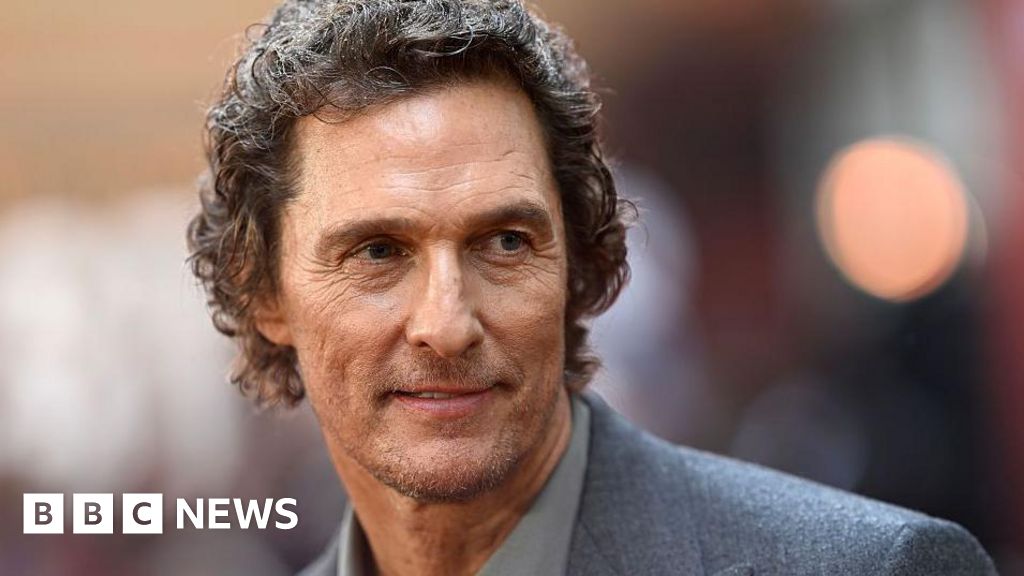
Matthew McConaughey, the Academy Award-winning actor, has taken steps to safeguard his image and voice from unauthorized use by artificial intelligence platforms by trademarking them. The Wall Street Journal reports that clips featuring his iconic catchphrase “alright, alright, alright” from the 1993 movie Dazed and Confused have been officially registered with the United States Patent and Trademark Office database.
Legal experts noted that this is the first instance of an actor utilizing trademark law to shield their likeness from potential misuse by AI. Notable figures in Hollywood and the music industry, such as Scarlett Johansson and Taylor Swift, have faced challenges due to the proliferation of fabricated video, audio, and images generated by AI tools online.
McConaughey’s legal team informed the WSJ that while they currently have no examples of his likeness being manipulated by AI, they aim to employ these trademarks broadly to combat any unauthorized reproductions. Kevin Yorn, one of the attorneys representing McConaughey, stated to AFP that another objective is to capitalize on the value generated by this emerging technology.
In correspondence with the newspaper, McConaughey emphasized the importance of ensuring that any use of his voice or likeness receives his explicit approval. He expressed a desire to establish clear boundaries around ownership in an AI-dominated environment where consent and attribution should be standard practice.
A variety of clips were formally registered by the commercial division of the Just Keep Livin Foundation, a non-profit organization established by McConaughey and his spouse Camila. Alina Trapova, a copyright law assistant professor at University College London, underscored the significance of this move within the entertainment industry.
Trapova highlighted how celebrities are exploring diverse protective measures due to the escalating challenges posed by AI-generated content like deepfakes. While McConaughey has interests in an AI technology company specializing in voice modeling, experts like Dr. Sandra Wachter predict that more individuals in creative fields may follow suit in safeguarding their work against unauthorized exploitation facilitated by AI advancements.