

The world is being transformed by the rapid expansion of AI in various ways. Scientists are now in a race to evaluate the environmental consequences of this thriving industry as it reshapes our lives and workplaces.
Forecasts concerning the resource usage and greenhouse gas emissions of AI paint a concerning picture. A recent study released in the journal Nature Sustainability reveals that the deployment of AI servers in the United States could result in an annual emission of 26 million to 48 million tons (24 million to 44 million metric tons) of carbon dioxide equivalent between 2024 and 2030—equivalent to adding 5 to 10 million new cars on the roads.
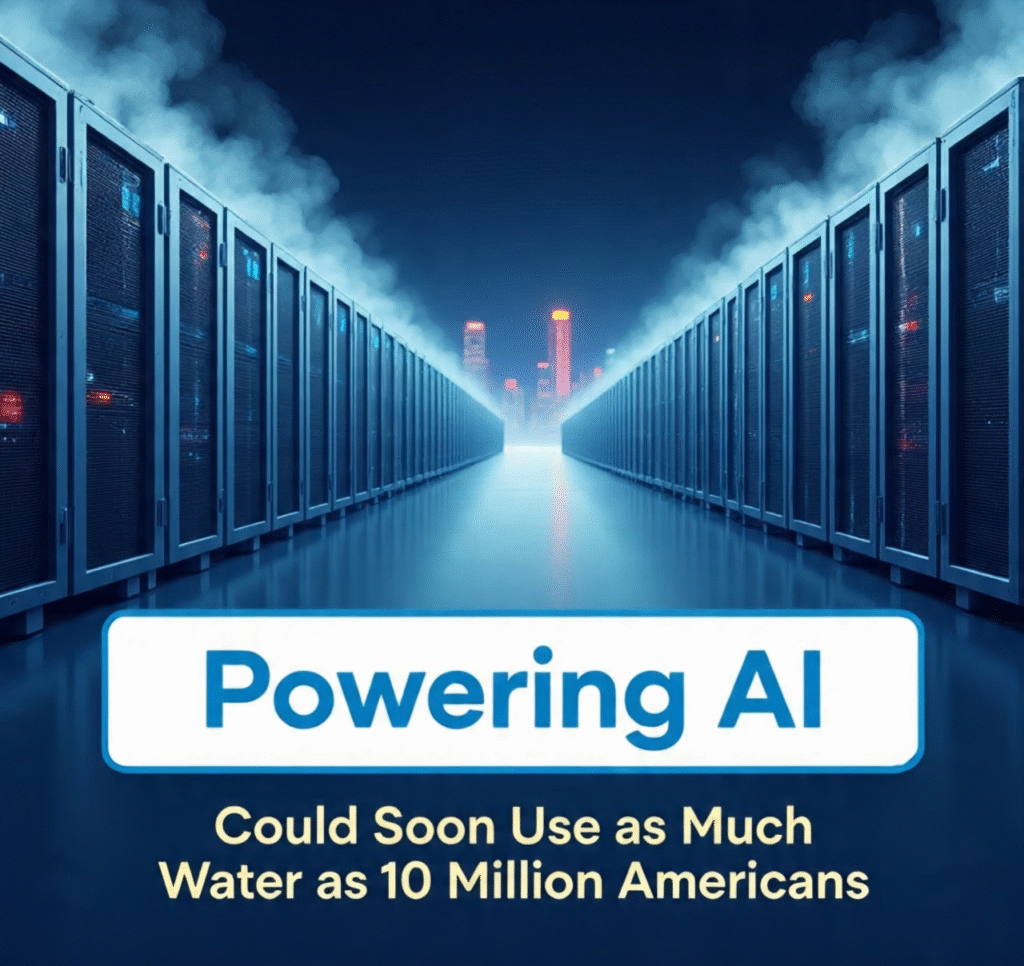
Furthermore, experts predict that AI could consume approximately 193 billion to 297 billion gallons (731 million to 1,125 million cubic meters) of water annually, which is comparable to the yearly water consumption of 6 to 10 million Americans.
Lead researcher Fengqi You, an esteemed professor specializing in energy systems engineering at Cornell University, emphasized the significant impact AI’s rapid expansion has on the environment. Despite highlighting these environmental repercussions, You also pointed out effective strategies to enhance the sustainability of the industry.
According to You, improvements in facility location, procurement of clean energy, and efficient cooling systems could reduce these impacts by around 70–85%. Thus, while the environmental footprint is substantial, coordinated efforts can manage it effectively.
The proliferation of AI data centers nationwide has already started affecting communities. Issues like soaring electricity bills, air pollution, and strain on power grids are challenges faced by Americans when these facilities emerge in their neighborhoods. Low-income areas and communities of color bear the brunt of these consequences.
The impacts are not confined locally; they extend globally as well. Through their analysis, You and his team demonstrated how the U.S. AI sector contributes to global climate change and national water scarcity.
To assess these broader implications, they connected estimated AI electricity demand with each state’s grid carbon intensity and water characteristics. By comparing baseline scenarios with mitigation strategies like smart siting and grid decarbonization, they aimed to lessen data centers’ impact.
Their findings underscored data center siting as a critical factor influencing AI’s environmental impact. States vary significantly in renewable energy availability, water resources, climate conditions, grid carbon intensity, and existing data center concentration. Consequently, where an AI workload operates can lead to a substantial difference in emissions or water usage.
The study revealed that many data center clusters are emerging in states facing water scarcity issues such as California, Nevada, and Arizona. In established data center hubs like Virginia, new constructions exacerbate existing strains on local infrastructure and resources.
You and his colleagues advocate for establishing new facilities in regions with abundant renewable energy sources and low water stress levels. They identify states like Texas, Montana, Nebraska, South Dakota from the Midwest region as well as New York with its mix of clean energy sources as ideal locations for reducing data centers’ environmental impact.
Nevertheless, addressing AI’s environmental impact requires advancements in cooling technology efficiency and grid decarbonization. You emphasized that the location of facilities alongside power sources and cooling technology will determine whether AI infrastructure contributes to sustainability or not. Despite its virtual appearance, AI relies on real-world systems like grids, water supply, and cooling mechanisms whose impact depends on construction sites and operational methods.