

This blog post’s primary focus is on the development of an algorithm to calculate all possible moves for a Tetromino piece in its initial position. The objective is to enhance the domain model, improve code clarity, and implement the solution using Clojure and Python with the Polylith architecture.
The previous sections of the blog series covered:
– Part 1: Placing a piece on a board, highlighting distinctions between Clojure and Python, and establishing the `piece` and `board` components.
– Part 2: Introducing row clearing functionality and demonstrating efficient feedback through REPL-driven development.
The resulting code from this installment includes workspaces for both Clojure and Python. Tetris has been recreated in various forms such as the Game Boy, Nintendo NES, and Atari arcade versions. Each variant exhibits differences in colors, starting positions, rotation behaviors, etc.
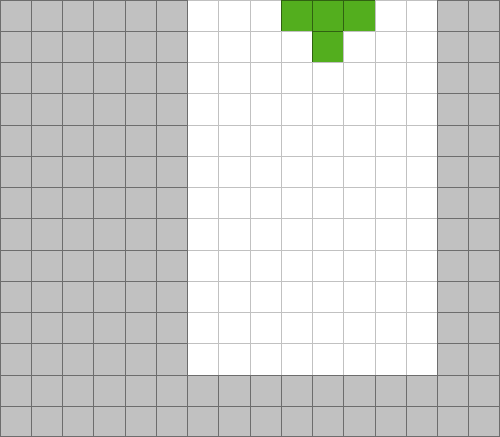
Most Tetris versions initiate pieces in a flat rotation state before descent. The initial x-position for pieces varies across platforms; for instance, on Nintendo NES and Atari Arcade, they begin at the fifth x-position while on Game Boy, it’s the fourth.
In older Tetris editions, pieces predominantly rotate counterclockwise compared to newer games that allow both clockwise and counterclockwise rotations. The comparison table illustrates how pieces rotate in the mentioned variants.
In our code representation, we define a piece using four [x y] cells. While this representation suits coding logic, it lacks human-friendly shape visualization.
The fundamental guideline is to craft code that is intelligible to humans and AI agents who interact with it. Hence, we redefine a piece as perceptive shapes for improved human comprehension.
Subsequently, we define all seven pieces along with their rotation states for Game Boy (Python code mirrors this). The shapes function converts these pieces into a format compatible with the code.
A test is conducted for the shape function to ensure its accuracy. The new code responsible for computing valid moves for a piece in its starting position necessitates an appropriate placement within our structure.
Contrary to object-oriented programming where data representation concealment is crucial, functional programming emphasizes transparent data representation. The set-piece function now resides within piece instead of board as per functionality alignment.
Further division of implementation across move-related namespaces enhances organization within our structure. Tests are crafted to validate various move scenarios within the game environment.
In Tetris gameplay mechanics, wall kick or shift adjustments are implemented when rotating a piece against occupied positions on the board. This feature varies across supported variants.
Bit-shift operations are employed to track visited move states efficiently. These flags denote visited [x y rotation] positions on the board ensuring optimization through structural sharing principles under Data Structures.
Initial groundwork is laid out to implement placements function facilitating computation of valid moves for a piece in its starting position. A detailed walkthrough of key sections within placements initialization process is elucidated step by step.
Finally, tests are executed successfully verifying the correctness of implemented functionalities without recursion limitations imposed by board size constraints. The blog concludes with a summary of achievements including enhanced readability and broader Tetris variant support.
We hope you found this journey as exciting as we did! 😃 Happy Coding!
*Published: 2026-02-17*
*Tagged: clojure, polylith, tetris, ai, python*