
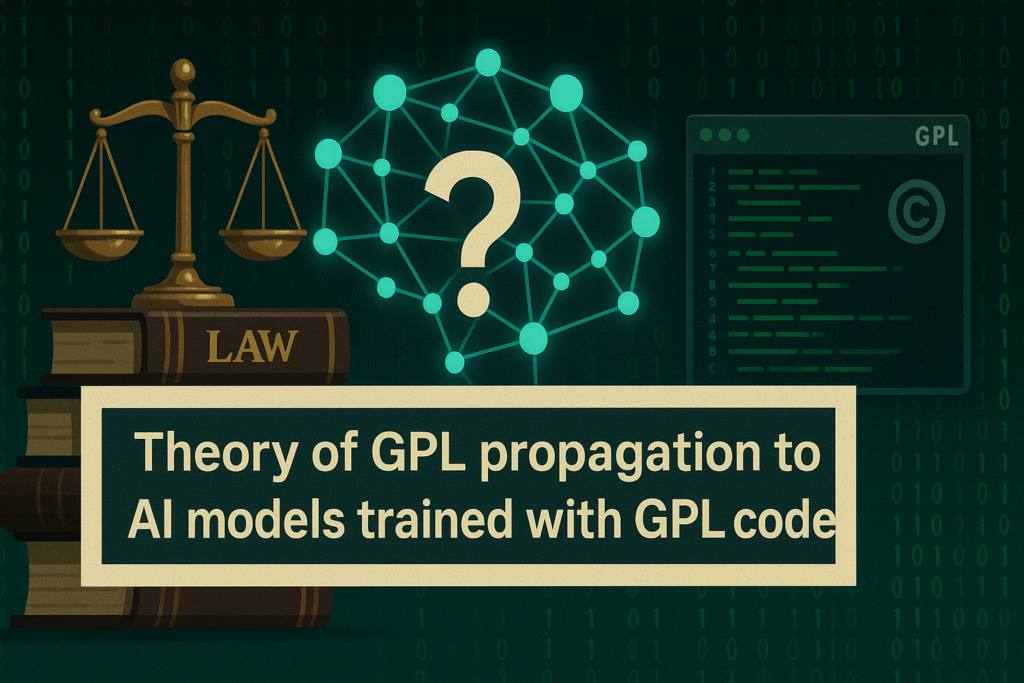
In 2021, GitHub Copilot caused a stir due to its use of vast amounts of publicly available Open Source code from GitHub in its training data, sparking debates on licensing issues. Concerns arose about meeting requirements like attribution stipulated by most licenses, with a focus on copyleft licenses such as the GNU General Public License (GNU GPL). The prevailing belief was that if GPL code was part of the training data, then the model itself should be released under the same license due to the concept of GPL propagation. This idea was widely accepted by many software engineers back then.
By 2025, the notion that the license of training code extends to AI models trained on Open Source code has waned. Although some advocates for software freedom still support this theory, the rise of AI coding has overshadowed these discussions. Despite this shift, ongoing lawsuits and unclear stances from major governments keep this issue unresolved.
The legal concept known as “GPL propagation to AI models” suggests that when an AI model learns from GPL code, it becomes a derivative work subject to GPL conditions upon distribution. While this theory was prominent in 2021, it is no longer mainstream today. However, ongoing lawsuits like the Copilot case highlight that the dispute over license propagation remains unsettled.
One significant lawsuit involves developers suing GitHub, Microsoft, and OpenAI for allegedly violating licenses by using public repository code without permission in training Copilot. The outcome of these cases will determine whether models must adhere to the source code’s license conditions during training and output.
Another lawsuit filed by GEMA against OpenAI regarding unauthorized use of lyrics by an AI model showcases how copyright issues surrounding AI models could impact theories of license propagation.
While the future recognition of license propagation theories remains uncertain pending legal decisions and legislative responses, it is evident that discussions around GPL propagation to models have not vanished entirely. Critics argue that treating AI models as derivative works poses challenges under copyright law and may not align with the intent of GPL licenses. Technical considerations and practical implications also cast doubt on the feasibility of extending GPL conditions to AI models.
Overall, while support for the theory of GPL propagation to AI models has diminished over time, it remains a topic of debate within legal and technical circles as organizations navigate the balance between software freedom and AI domain freedoms.