
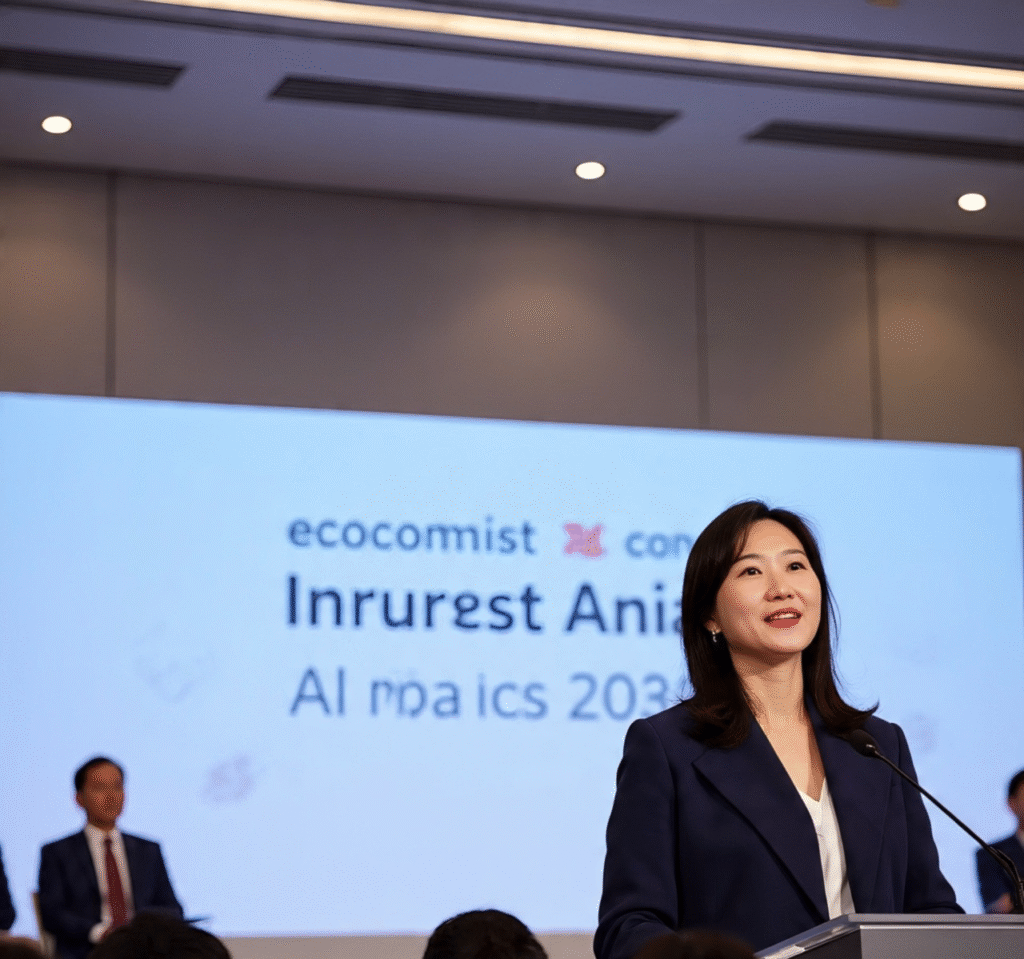

The Chief Development Officer of ZTE Corporation, Cui Li, participated in the AI Innovation Asia 2025 conference organized by Economist Impact. During the panel discussion on “Enhancing Customer Experience with Agentic AI,” Cui Li presented ZTE’s strategic approach to agentic AI and its impact on customer experience and operational frameworks within the company. She emphasized the importance of agentic AI in enhancing resilience, oversight, and accountability while urging organizations to prepare for the forthcoming era of agentic AI.
Agentic AI is revolutionizing user experiences beyond just UI design, focusing on response, comprehension, and collaboration. ZTE is implementing agentic AI across four main domains under its “AI for All” initiative: networks, computing, homes, and personal devices.
One significant application is ZTE’s collaboration with China Mobile to develop multi-agents capable of identifying network issues and facilitating self-repair, reducing troubleshooting time by 47%. As we navigate through uncertain times, it is crucial to prioritize stability amid uncertainty and transition towards an agile and adaptable organizational structure.
Moreover, understanding how AI can truly benefit us is essential. Large AI models are already achieving performance levels comparable to or exceeding those of PhD holders. By integrating memory and tools, agents serve as practical applications of these models, automating complex tasks efficiently. Although challenges persist at this early stage of development, the rapid advancement in AI technology suggests that solutions will emerge soon.
In the quest for intelligence, a long-term commitment to digital transformation is essential. Intelligence relies on robust digital and network infrastructures. To achieve true intelligence and adaptability, companies must undergo knowledge engineering, process restructuring, and embrace an AI mindset—a journey that requires endurance rather than haste.
Ultimately, humans must remain central in decision-making processes such as design, review, and supervision. Automation should serve as a tool rather than a replacement for human involvement. The complexity of emerging technologies like agents or agentic AI brings both transformative potential and challenges such as black-box problems. Human attributes like social intelligence and morality remain unparalleled by AI’s statistical modeling capabilities.
Looking ahead, agents or agentic AI can be viewed as proactive digital collaborators capable of managing intricate workflows and evolving independently. While they excel in structured environments with clear feedback loops, real-world complexities pose challenges that require ongoing refinement.
Embracing AI is imperative for organizations seeking sustainable growth and adaptation to market dynamics. Beyond mere API integration, deploying AI necessitates redefining processes, structures, and team dynamics. Strategic planning for mid- to long-term goals coupled with flexibility to accommodate technological advancements is key for leveraging AI effectively in today’s fast-evolving landscape.
AI Innovation Asia 2025 serves as a platform uniting industry leaders, tech innovators, and policymakers to explore the commercialization pathways of cutting-edge technologies like generative AI and Agentic AI. Through thematic sessions led by industry experts, the event aims to empower businesses in Asia-Pacific to translate technical insights into tangible growth opportunities amidst a dynamic market environment.